
Sewer Pipe Lining
Repair damaged sewer lines from the inside without digging up your entire yard, driveway, or concrete.
Sewer pipe lining is a trenchless repair method that creates a new smooth liner inside your existing sewer pipe. Instead of removing the entire old pipe, we clean and prepare the line, install a resin-saturated liner, and cure it in place to help restore flow and seal damaged areas.
- No full-length trench required
- New liner installed inside the existing pipe
- Great for many cracked clay and cast iron sewer lines
- Less damage to concrete, pavers, lawns, and landscaping
- Helps seal cracks, joints, and root-damaged areas
- Serving LA, Orange, Ventura, Riverside & San Bernardino County
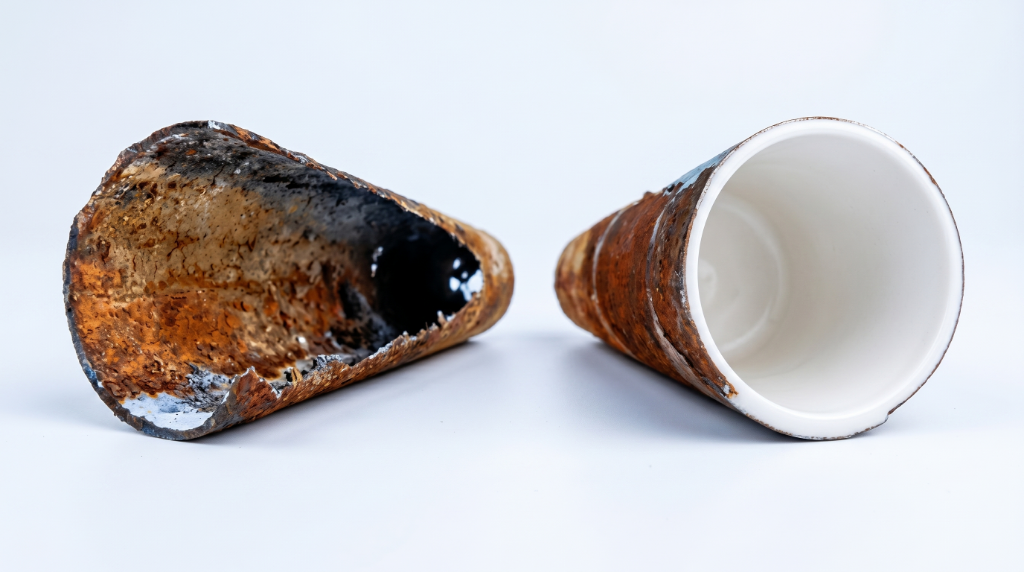
Sewer pipe lining creates a smooth new surface inside the existing damaged pipe.
What Is Sewer Pipe Lining?
Sewer pipe lining is a trenchless sewer repair method used to rehabilitate an existing sewer or drain line from the inside. It is also called CIPP sewer lining, which stands for cured-in-place pipe.
Instead of digging up the entire sewer line and removing the old pipe, a flexible liner is saturated with resin and inserted into the existing pipe. The liner is expanded against the inside walls of the old pipe and then cured in place. Once it hardens, it creates a smooth new pipe surface inside the damaged sewer line.
This can be a great option for sewer lines with cracks, root intrusion, small gaps, worn cast iron, or old clay pipe joints — as long as the existing pipe still has the right shape, grade, and structure for lining.
How Sewer Pipe Lining Works
Locate and Evaluate the Existing Sewer Line
We locate the existing sewer or drain line and determine how it is ran. We review the route, access points, pipe condition, depth, and whether the line is a good candidate for pipe lining.
Clean and Prepare the Pipe
Before lining, the inside of the pipe needs to be cleaned and prepared. Roots, buildup, scale, and debris must be removed so the liner can properly sit against the old pipe.
Install the Resin-Saturated Liner
A flexible liner saturated with resin is inserted into the existing sewer line through an access point. The liner is positioned inside the damaged pipe section.
Expand the Liner Inside the Pipe
The liner is expanded against the inside walls of the existing pipe. This allows it to form tightly to the pipe's interior shape.
Cure the Liner in Place
The liner is cured in place until it hardens. Once cured, it creates a new smooth pipe surface inside the old sewer pipe.
Reopen Connections and Final Check
After the liner cures, any required openings or connections are restored, and the line is checked for proper flow.
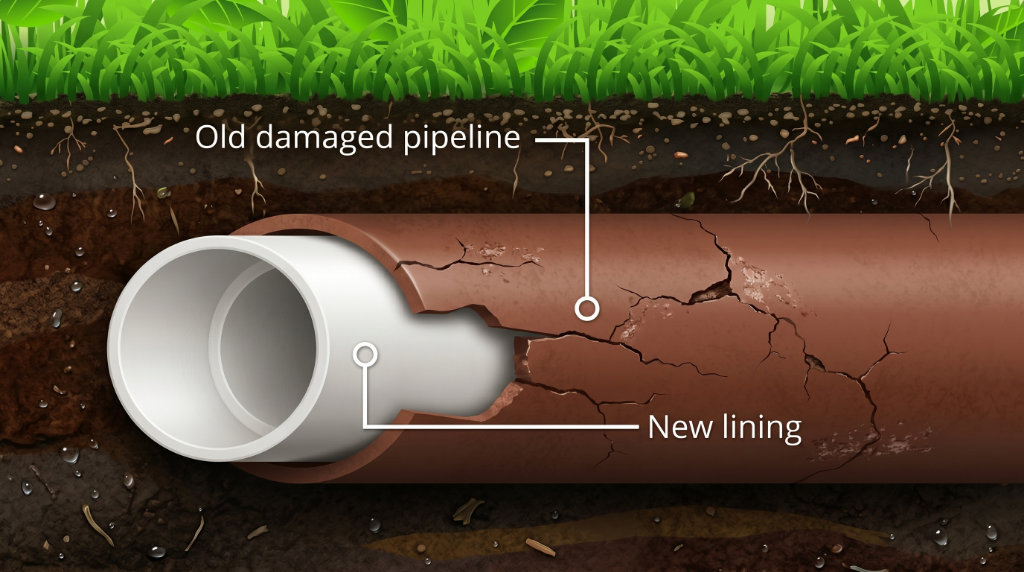
CIPP lining installs a new liner inside the existing sewer pipe without digging a full trench.
Why Homeowners Choose Sewer Pipe Lining
No Full Trench
Pipe lining avoids digging a full trench across your yard, driveway, or concrete in many cases.
Less Property Damage
A great option when the sewer line runs under hardscape, pavers, landscaping, flooring, or finished areas.
Smooth New Interior
The cured liner creates a smoother pipe surface inside the old sewer line, helping improve flow.
Helps Seal Damaged Areas
Pipe lining can help seal cracks, joints, small gaps, and root-damaged areas inside the existing pipe.
Good for Older Pipes
Many older clay and cast iron sewer lines can be candidates for lining if they are not fully collapsed or badly offset.
Cleaner Process
Because the repair is done from access points, the job is usually less invasive than traditional excavation.
When Sewer Pipe Lining Is a Good Option
Sewer pipe lining may be a good fit when the existing pipe is damaged but still has enough structure and proper grade to support a liner.
- Old clay sewer pipe with cracks or joints
- Old cast iron pipe with corrosion or rough interior walls
- Root intrusion
- Small cracks in the sewer line
- Leaking pipe joints
- Sewer line under concrete
- Sewer line under pavers or landscaping
- Sewer line under flooring or finished areas
- Repeated sewer backups caused by pipe damage
- Spot repairs or longer sections that can be lined
Sewer Pipe Lining vs Pipe Bursting
| Category | Sewer Pipe Lining | Pipe Bursting |
|---|---|---|
| Method | Creates a new liner inside the existing pipe | Breaks old pipe apart and pulls in new HDPE pipe |
| Old Pipe | Old pipe stays in place — liner goes inside it | Old pipe is broken apart underground |
| Best For | Cracks, joints, small gaps, root-damaged areas | Badly deteriorated lines needing full replacement |
| Result | Smooth liner bonded to old pipe interior | Brand new HDPE sewer pipe installed |
| Excavation | Access points only — no full trench in most cases | Access pits at each end — no full trench in most cases |
Both methods are trenchless options, but they solve different problems. Pipe lining rehabilitates the inside of the existing pipe. Pipe bursting replaces the old pipe with a new one. We help determine which option makes more sense based on the line, access, and property conditions. Learn more about our trenchless pipe bursting service.
Sewer Pipe Lining vs Traditional Digging
| Category | Traditional Sewer Repair | Trenchless Sewer Lining |
|---|---|---|
| Excavation | May require digging a long trench | Uses existing access points when possible |
| Surface Disruption | More concrete, landscaping, or flooring removal | Less surface damage |
| Restoration | More cleanup and restoration after the job | Can be faster and cleaner in many cases |
| Best For | Collapsed pipe, major grade problems, severe offsets | Damaged pipe that is still lineable |
Is Sewer Pipe Lining Always Possible?
No. Sewer pipe lining is a great option for many damaged sewer lines, but it is not always the right solution. The existing pipe needs to be cleanable, accessible, and stable enough to accept the liner.
Pipe lining may not be recommended if the pipe is fully collapsed, has major bellies, has severe grade issues, has large offsets, or cannot be properly cleaned. In those cases, pipe bursting or traditional excavation may be the better option.
We will locate the line, review how it is ran, inspect the access points, and explain the best repair option before starting work.
Southern California Sewer Pipe Lining
Many homes throughout Southern California still have old clay or cast iron sewer lines. Over time, these pipes can crack, separate, rust, scale, or allow tree roots to enter the line. That can lead to repeated backups, slow drains, sewer odors, and costly temporary repairs.
Sewer pipe lining can be a strong trenchless option when the existing pipe is damaged but still a good candidate for lining.
We provide sewer pipe lining and trenchless sewer repair services throughout Los Angeles County, Orange County, Ventura County, Riverside County, and San Bernardino County.
Cities we serve include: Pasadena, Los Angeles, Glendale, Burbank, Whittier, Alhambra, Long Beach, Santa Clarita, Anaheim, Irvine, Huntington Beach, Riverside, Ontario, Thousand Oaks, Simi Valley, and surrounding cities.
Signs You May Need Sewer Pipe Lining
Need Sewer Repair Without Digging Up Your Property?
If your sewer line is cracked, root-damaged, or deteriorating, sewer pipe lining may be a clean and less invasive repair option. We can locate the line, review how it is ran, explain your trenchless options, and give you a clear price before work starts.
Honest recommendations. Clear pricing. No-pressure estimates.
Frequently Asked Questions
Get a Free Sewer Pipe Lining Estimate
Fill out the form and we'll be in touch shortly.